🧊 Canada’s Winter Shock
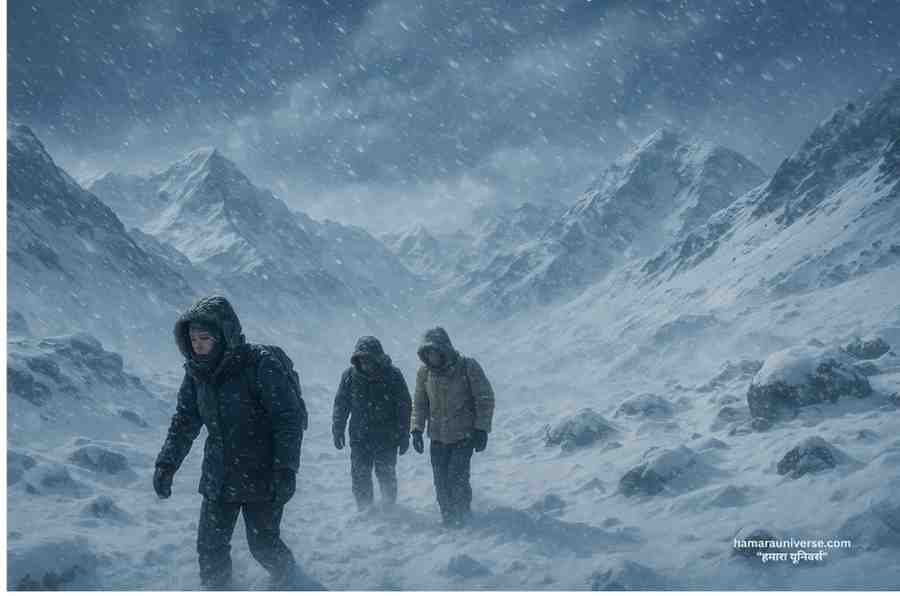
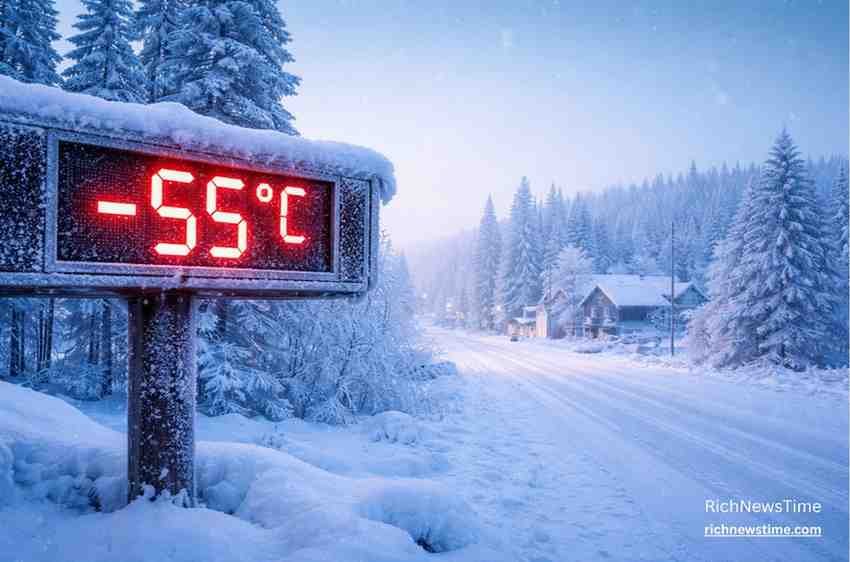
In December 2025, much of Northern Canada experienced an extraordinary cold wave that grabbed global attention — including a temperature reading of –55.4° C in Braeburn, Yukon on December 22, a mark not seen since the late 1990s. This event wasn’t just another cold spell; it was one of the deepest and most persistent cold waves in recent decades, with readings that rival historic records and wide-ranging impacts on communities, infrastructure, and weather patterns
📍 How Cold Did It Get? Verified Records from Northern Canada
🔹 Record Setting in Yukon
On December 22, 2025, Braeburn, Yukon recorded a temperature of –55.4 °C, making headlines around the world.
Just one day later, on December 23, the same weather station logged –55.7 °C, which marked the lowest December temperature in Canada since 1975.
These low-temperature readings stand out because:
- They are near the all-time Canadian December lows.
- They represent the coldest extreme in decades, especially for the end of the year.
- Such temperatures are normally only seen in the heart of January or February.
What’s particularly remarkable is how sustained the cold was — this wasn’t a single cold snap, but a multi-week freeze across northern regions.
🔹 Other Cold Observations Across the North
Beyond Braeburn:
- Mayo, another Yukon community, saw 16 consecutive nights below –40 °C.
- Dawson City also experienced similarly long periods of extreme cold.
- Other parts of northern Canada, including the Northwest Territories, recorded temperatures below –50 °C around the same period.
These conditions are extraordinary, especially considering that such intense cold so late in the year is unusual even for Arctic Canada.
🌬️ Why Did It Get So Cold? The Science Behind the Freeze
To understand why Canada experienced such brutal cold in late December 2025, we need to talk about atmospheric dynamics, particularly the polar vortex.
❄️ What Is the Polar Vortex?
The polar vortex is a large area of low pressure and cold air surrounding the Earth’s poles. It’s always present in winter, but its shape and strength can vary. When the vortex remains strong and stable, it keeps the coldest air locked in the Arctic. But when it weakens, elongates, or splits, that frigid air can spill southward into Canada and even into the United States.
❄️ Polar Vortex Split in 2025
In the winter of 2025/26, meteorologists observed an unusual disruption of the polar vortex that allowed Arctic air to push firmly into northern Canada. The vortex didn’t collapse completely but instead elongated and split, which helped cold air plunge deep into the Yukon region.
This pattern was part of a larger “Polar Express” circulation, where a strong high-pressure system formed over Alaska and western Canada, allowing Arctic air to pool over the Yukon while powerful jet stream winds helped maintain the cold over northern territories.
❄️ Arctic Ridge and High Pressure Lock
Once the Arctic air mass settled, a persistent ridge of high pressure formed over the region, slowing the warming process. Cold air is dense and heavy, so when a high-pressure system traps it near the surface, temperatures can plummet and stay low for extended periods.
This combination of a polar vortex disruption and high-pressure buildup made the late December cold unusually intense and long-lasting.
🏘️ Impacts on People and Infrastructure
🔧 Power and Energy Strain
Extreme cold wasn’t just uncomfortable — it pushed Yukon’s energy infrastructure toward its limits. Power grids worked near capacity as heating demand surged, and authorities warned that any outages could have serious consequences.
In some areas:
- Power demand hit record levels.
- Renewable energy sources like hydro plants were stressed.
- Officials warned of possible outages if systems failed.
This shows how extreme cold can create secondary challenges, even for countries accustomed to winter conditions.
🧤 Public Safety Risks
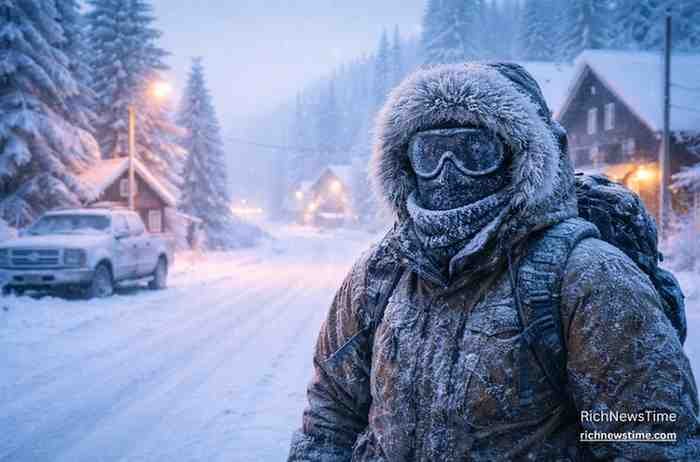
Temperatures below –40 °C pose real dangers:
- Frostbite can occur in minutes on exposed skin.
- Hypothermia risk increases significantly.
- Road and transportation systems can be disrupted.
Environment Canada and local officials issued cold weather advisories urging people to stay indoors when possible and to prepare emergency kits if they must travel.
🛣️ Travel, Schools, and Daily Life
Many northern communities saw:
- Travel advisories on highways due to flash freeze conditions.
- Impacts on airports and vehicle performance.
- School closures or delayed openings because of prolonged cold.
Even everyday activities like walking pets or collecting groceries became hazardous when wind chills pushed the effective temperature well below the measured air temperature.
❄️ Canada vs. Global Weather: Warm Trends with Cold Extremes
While this severe cold grab headlines, it exists within a larger climate context.
🌡️ Warming Trends Across Canada
Overall climate trends show that Canada is warming — not cooling — on average. Long-term data indicates:
- Canada’s national average temperatures have been increasing over recent years.
- The north is warming faster than the global average.
This may seem contradictory, but climate change doesn’t eliminate cold waves; it can change atmospheric patterns that make them more unpredictable and sometimes more extreme.
🌍 Arctic Ice Decline
Arctic sea ice levels have been declining, which influences how and when cold air builds and moves. Lower ice cover affects temperature gradients and can disrupt typical air circulation patterns.
This interplay between warming in parts of the Arctic and intense cold pockets helps explain why extreme weather records can still occur in a warming world.
📊 Historical Perspective: How Unusual Is –55° C?
Canada has a history of deep cold:
- The all-time lowest temperature recorded in Canada was –63 °C in Snag, Yukon, in February 1947.
- Despite that, December temperatures around –55 °C are rare and noteworthy — especially as late as late December.
Most of the extreme cold records normally occur in mid-winter — late January and February — making the late December event of 2025 particularly remarkable.
🧠 What This Means for the Future
📍 More Frequent Extremes?
Scientists are still studying whether events like this will become more frequent. Some theories suggest that changes in the polar vortex behavior — possibly linked to broader climate shifts — could lead to more variable and extreme winter weather, even in a warming climate.
📍 Preparedness Is Key
For communities in the North:
- Improving energy infrastructure resilience is critical.
- Emergency planning for prolonged cold should be a priority.
- Transportation systems need adaptation to ensure continuity during prolonged freezes.
📝 Conclusion: The –55.4° C Canadian Cold Explained
Yes — the report that Northern Canada experienced extreme winter cold near –55.4 °C in December 2025 is true and verified. These readings represent some of the lowest temperatures in decades for the Yukon and are tied to a complex combination of atmospheric patterns involving a polar vortex disruption and persistent Arctic high-pressure systems.
While headline-grabbing, these data points are part of a larger picture of climate variability in a changing world — one where cold extremes can still occur alongside warming trends. Being prepared, informed, and adaptable will be crucial as communities continue living with these dramatic weather shifts.
📚 for more info -(External links)
📚 Also Read this
एल नीनो और ला नीना 2025: क्यों आने वाली सर्दी होगी 110 सालों में तीसरी सबसे ठंडी?